Showing posts with label SEO. Show all posts

Wednesday, October 1, 2014

How I Doubled Traffic To Over 200,000 Organic Visitors Per Month, Overnight

How I Increased Traffic From 100,000 to Over 200,000 Organic Visitors Per Month, Overnight


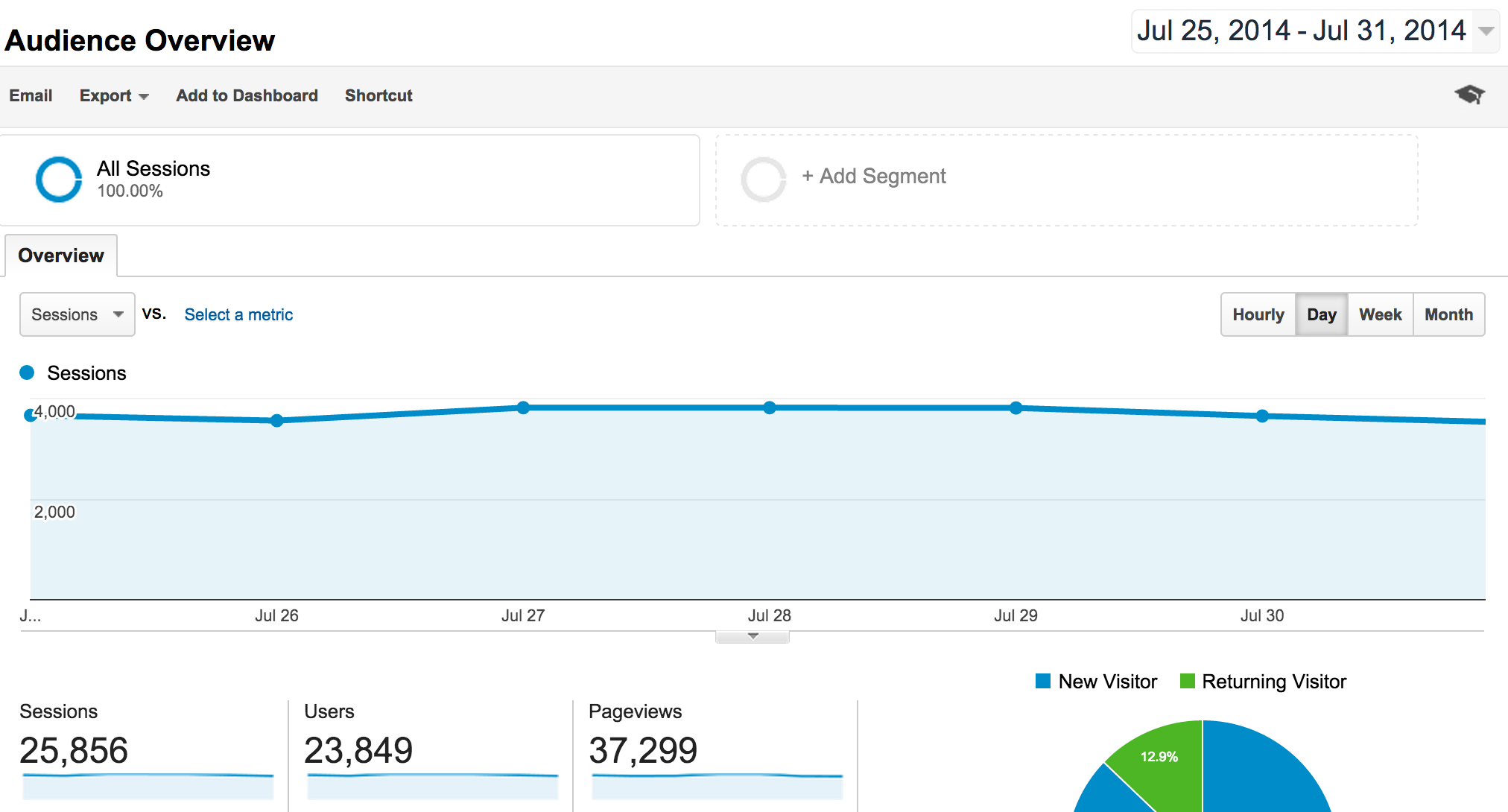
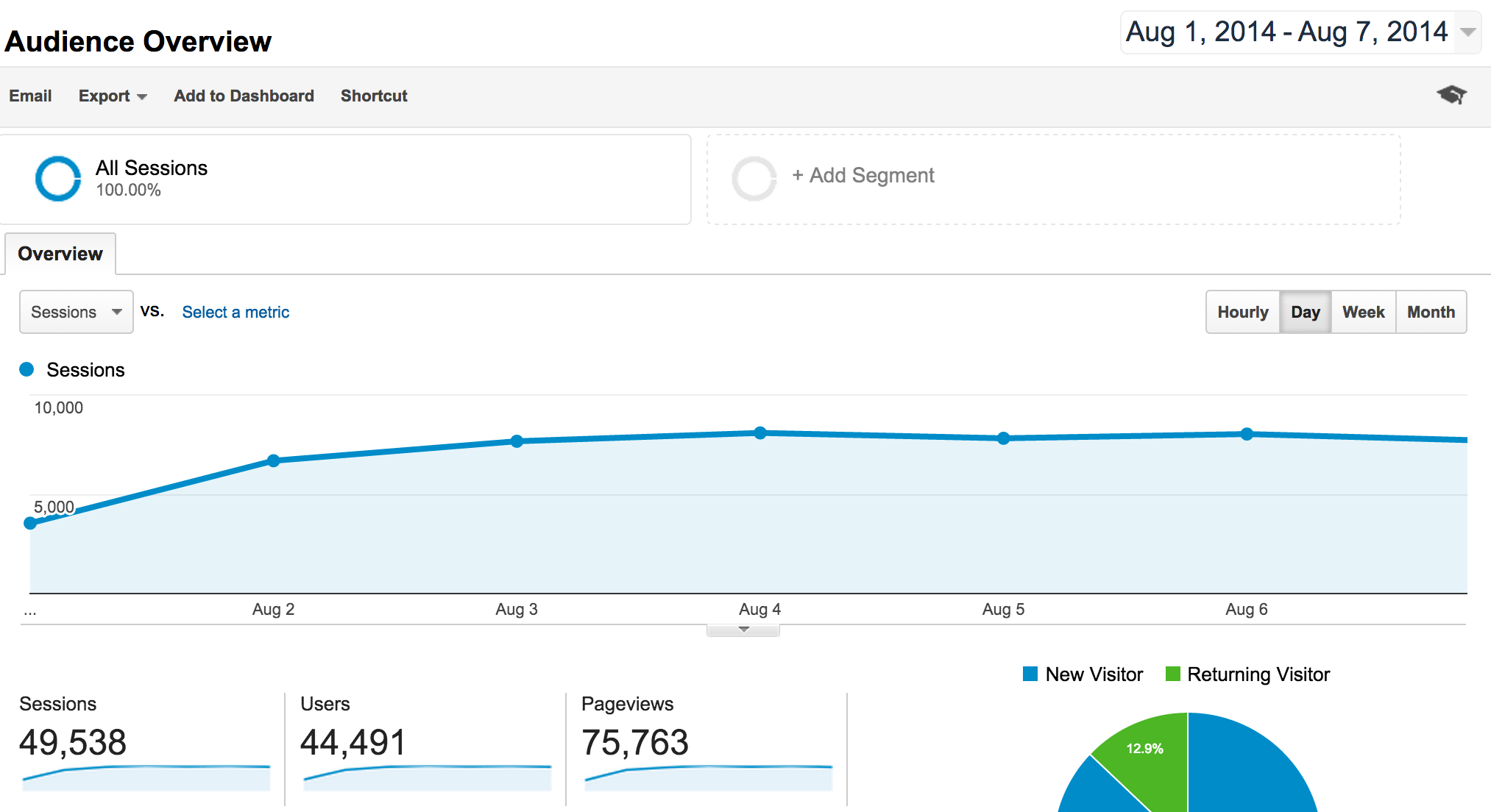
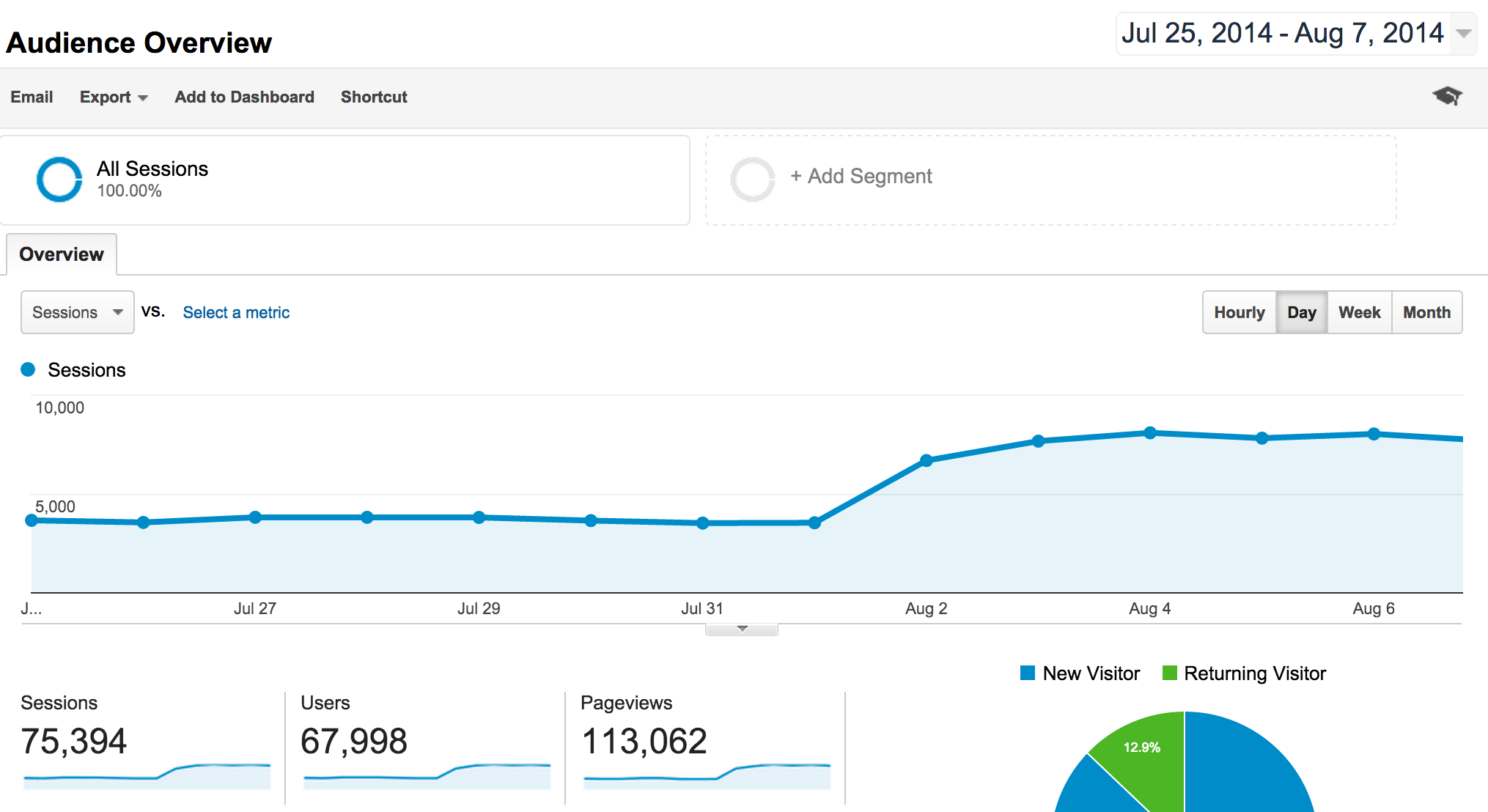
This is a case study on how I doubled organic traffic to an existing website from 100,000 visits per month to over 200,000 visitors per month, overnight, using technical SEO and the osmosis technique.


This was done using a strategy that involves absorbing another operating website’s content, rankings, and ultimately traffic.


Here’s the website’s traffic the week before, from July 25, 2014 to July 31, 2014:

Click to Enlarge

Click to Enlarge


And here’s the same website’s traffic the week after, from August 1, 2014 to August 7, 2014:

seo-case-study_traffic-week-080114-080714

Click to Enlarge


And here’s what the lift looks like:

Click to Enlarge

Click to Enlarge


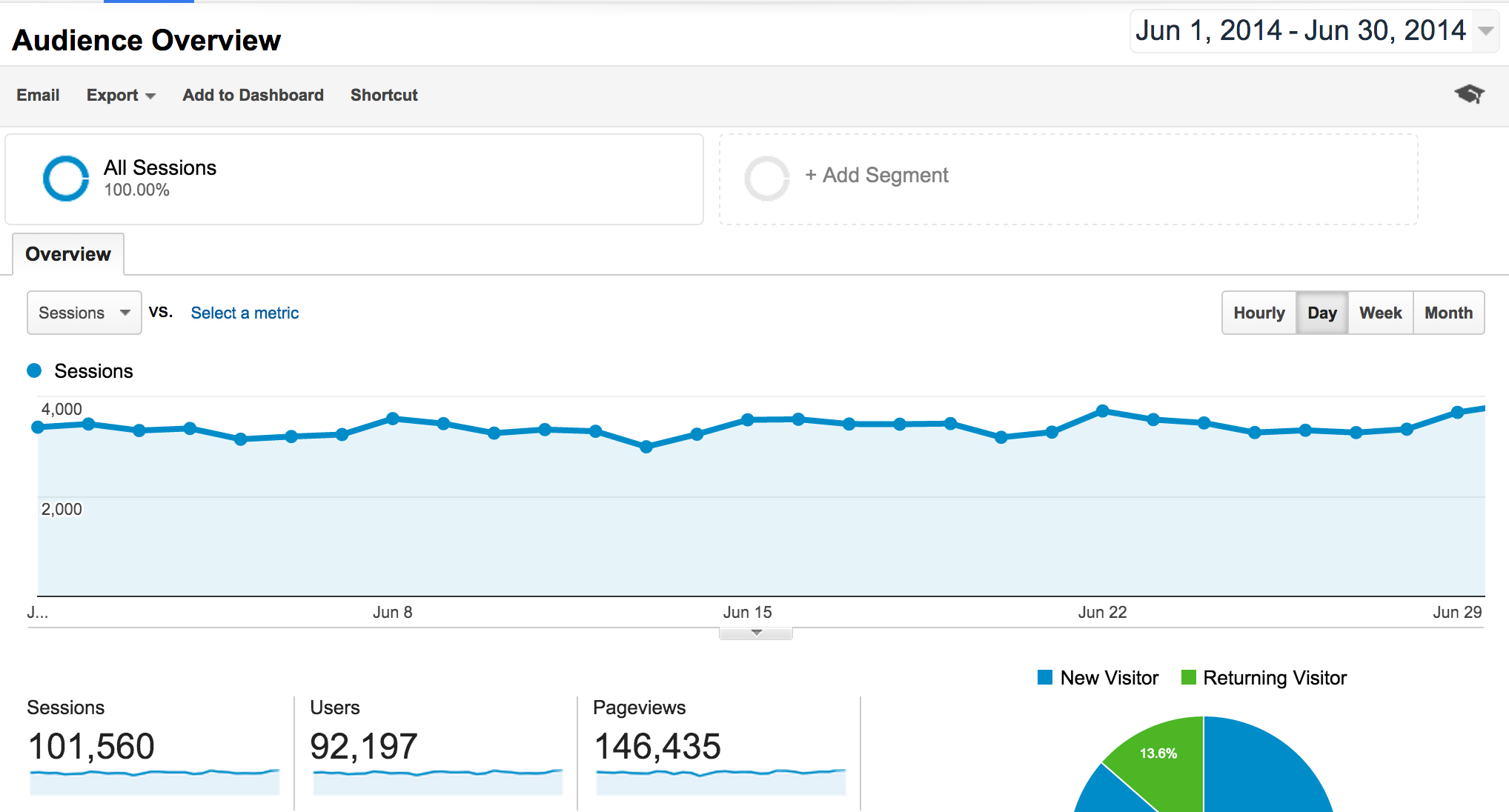
Here’s the website’s traffic for the month of June 2014 (prior to absorbing the other site):

Click to Enlarge

Click to Enlarge


And here’s traffic for August 2014 (with the osmosis taking place on 8/1/14):
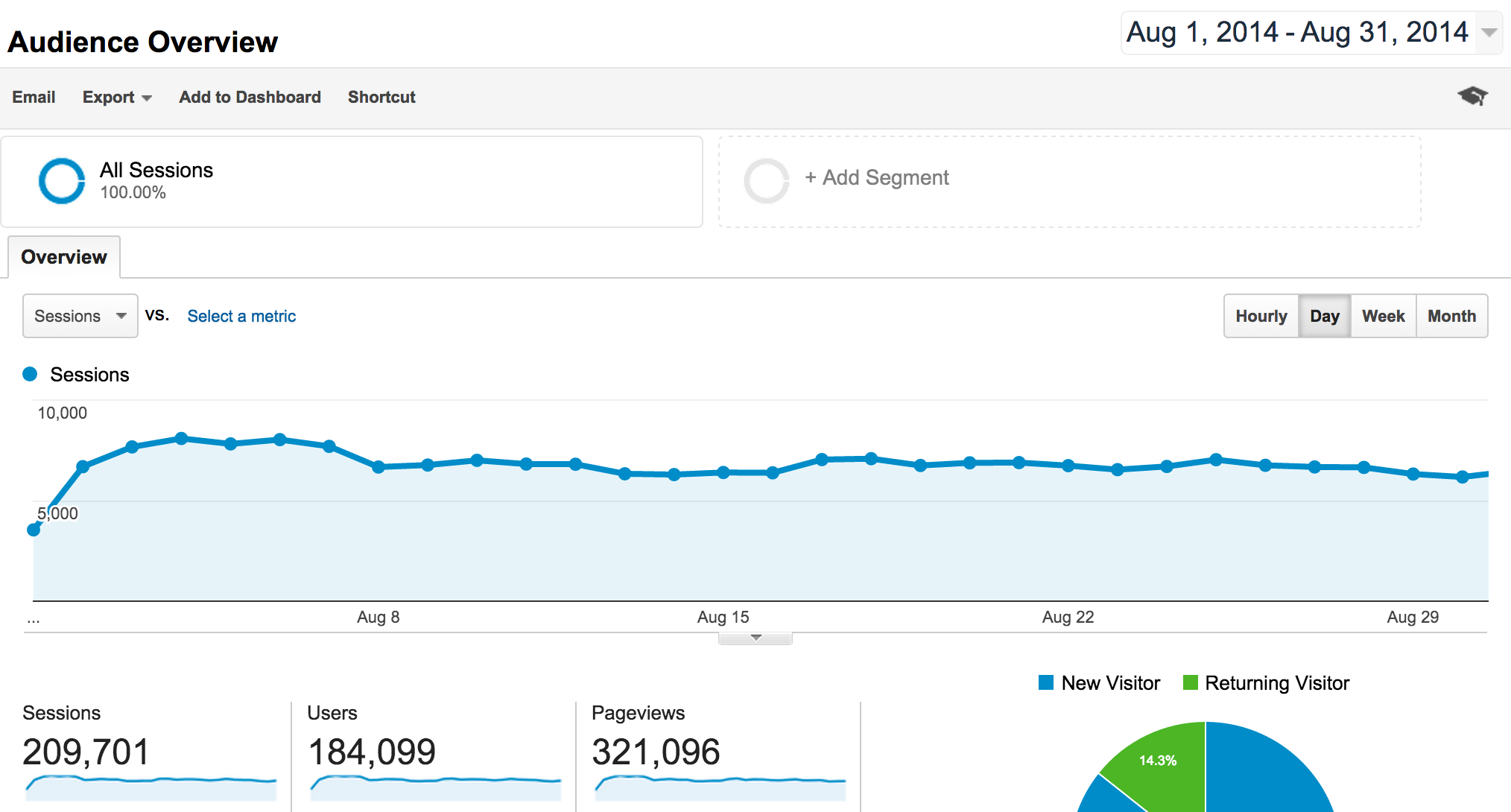

Click to Enlarge

Click to Enlarge


So What is SEO By Osmosis


Just like in science where one membrane absorbs the property’s and molecules of another membrane during osmosis, this SEO strategy involves absorbing the content and rankings of another website so as to inherit it’s organic traffic.


So how do you do this?


The concept itself is actually very simple, but the implementation needs to be spot on or you could torch both websites, at least temporarily.


The process involves using one of two methods to essentially swallow the content of the other website, and then inherit it’s organic rankings and thus traffic.


How To Absorb All The Traffic


As mentioned earlier there is 2 ways to do this:


  1. Using 301 re-directs, or

  2. Using cross-site canonical tags

Both involve the same process of preparing for the cut-over; the content needs to be duplicated on the destination website by being uploaded to the destination site’s database.


If you’re going to use 301′s then it’s best to try to replicate the URL structure of the old site’s pages and if possible place these all in one new directory, so you only have to write one mod rewrite statement to repoint all of these URL’s to their new home.


In the example I use for this post I used a sitewide 301 re-direct to sub-directory on the destination website.


If you are going to use cross-site canonical tags the process has a few extra steps:


  • The canonical tag needs to be added into the head of every page that you will be absorbing.

  • Generate a fresh sitemap to make sure all pages are included.

  • Brute-force submit this sitemap through webmaster tools 3+ times each day to forge Google to crawl and index those canonical tags.

  • Keep an eye on the URL’s ranking for those pages and once you see 75%+ you need to set the old domain to return a  403 Forbidden Error.

What Makes A Good Osmosis Website


Finding a website that is a good fit for this strategy has a lot of implications, for example:


  • The website needs to already have sufficient natural rankings and a sustainable base of organic traffic, although sufficient is a relative term here and will vary depending on your comfort level for risk and investment.

  • The website should have content that is at least tangential or in some way related to that of the target destination website.

  • Ideally the website will be built on a stack using the same kind of database, for example if I was going to do this for *this* website I would look for a site running a MySQL database (even more ideal would be if it was wordpress), so I could download and then simply upload to my database.

Finding websites at this scale (~100,000+ visits per month) available for acquisition is not easy, it’s much more likely that you will be able to find sites in the 10-30k visit per month range that you will be able to pick up for a few thousand dollars based on:


  • Age of the domain

  • Authority of domain (PageRank / DA)

  • Number of unique visitors

  • Monetization and revenue

 Is This Traffic Sustainable?


You tell me, here’s the traffic numbers for September 2014:
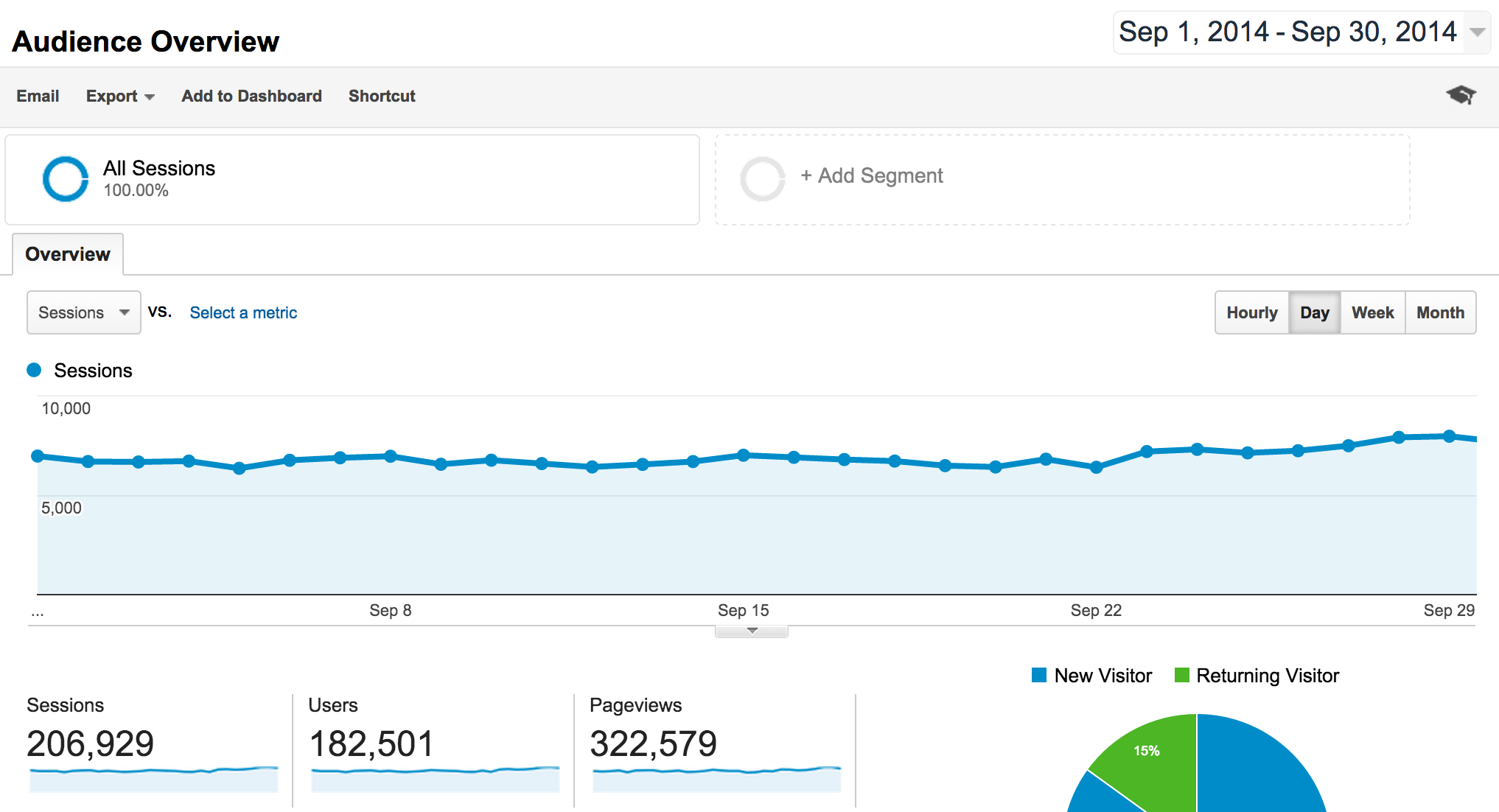

Click to Enlarge

Click to Enlarge


Something To Be Aware Of..


It seems there is a somewhat rampant problem in Google with continuing to index old domains that have been 301′d, here are a few examples:


However, the meta attributes, i.e. page titles and meta descriptions as well as URL targets (destinations) are all pointing to the correct version and bringing click-throughs to the right place, so in terms of traffic this still works – but in terms of continuity of user experience, this seems way off.


With that said in my experience this problem is less significant when you go the cross-site canonical route to absorb the traffic. Thank you to Ross Hudgens for providing me with Rishi’s tweet and examples.


For Future Updates


I plan to continue to acquire more sites and fold them into this same site to see if I can grow through traffic acquisition to over 1,000,000 visitors per month. To stay tuned on my progress (including sites I’m looking at buying and details on traffic and bids/offers) that I won’t share here, join my mailing list (it’s free).


Lastly, if you enjoyed this post, and especially if you didn’t, please consider taking a moment to leave a comment – I use comments as my number 1 indicator on how well a post topic or concept resonates with readers.


Thank you.


The post How I Doubled Traffic To Over 200,000 Organic Visitors Per Month, Overnight appeared first on SEO Nick.


How I Doubled Traffic To Over 200,000 Organic Visitors Per Month, Overnight

Searchmetrics SEO Visibility Gets Fully Integrated in cognitiveSEO

Some say we are workaholics, some say we are perfectionists. What we say is that we do our best to provide our customers with the best experience they can get from using a SEO platform. The fall comes along with a partnership we are proud to introduce to you today.


The cognitiveSEO + Searchmetrics integration provides unparalleled insight for any SEO Professional.


In the following lines we are going to present you the importance of this integration and the benefits that you will get from it.


Searchmetrics cognitiveSEO Integration


What Is the SEO Visibility and Why It Is Important


First of all, you need to know that cognitiveSEO is the first well known SEO tool (and the only one at this moment) to have this sort of integration combined with all the other SEO related data crawled on demand for your site and competitors. In other words, there is no other place that you can get this variety of information for your site or for your competitors’.


What is the SEO visibility, you might ask, and why is it so important?


SEO visibility is essentially about monitoring the search performance of a website as it presents the historical development of a domain’s visibility in Google. It has 2 components, search volume and the position of the ranking keywords. It basically reflects how often a website shows up in the search results and also helps you track the “winners” and “losers” in terms of keywords, providing results based on tracked keywords. The SEO Visibility provides you with great value of the market environment and also helps you easily identify market trends and digital marketing strategies. The SEO visibility is calculated based on millions of keywords that are tracked in Google and their importance and traffic volume. Each keyword has a particular importance and based on that and the ranking of the tracked site a SEO visibility score is calculated. This score is updated weekly.


This new integration is available for all clients, regardless of the subscription they have and also on all the campaigns they are working on, whether they are One time snapshots or Recurring Campaigns.


This being said, allow me to showcase the main advantages that you will benefit from now on:


What Can You Do with the SEO Visibility?


1. Identify Historic Google Penalties for Any Site


In identifying a penalty, you should always check all possible hypotheses, by doing an in-depth analysis and looking at all the angles. Getting distracted by the obvious things might lead you to the wrong conclusion. Yet, at cognitiveSEO we are trying to make the penalty identification process as easy as possible because we know how important this matter is for our users.


Easily Spot Historic Google Penalties using the SEO Visibility Metric


With the integration of the SEO visibility chart, we take the “penalty identification” process to another level. Every time you’re trying to figure out what happened to a certain website, the first chart you should look at is the one with its visibility drop. Just by taking a glance at this chart you can easily see whether there are significant downhills in a website’s history that can reflect a Google “red flag” or whether that site’s online visibility is stable and doesn’t have dramatic ups and downs. What is very important to mention is that you can not only see the current situation of a site but also check out for penalties or boosts in a historical trend.


If you are a reader of our blog, you might be familiar with some of our case studies regarding penalized sites. If you are not a fan of our blog (with the hope you will become one :D), let me tell you that the SEO visibility and the “dropped”/ “improved” keywords charts are one of the most important graphs that we use in our in-depth investigation of a site’s situation. Here are some of our case studies where you can see the exact applicability of these charts and their importance in accurate penalty identification.


2. Analyze Competitors and Compare Yourself


Competition is always a good thing. It forces us to do our best. However, knowing your competition is even better. Understanding your competitors’ previous decisions regarding their strategies sheds some light on what gave them an advantage or what backfired.


SEO Visibility Competitor Comparison


You know exactly where you’re standing in your niche as you now have the possibility to make direct comparisons with your competitor, regarding your SEO visibility. Moreover, analyzing the evolution of the most important keywords for you and your competitor will give you the possibility to discover which keywords drive more visitors and which ones are those which pull the traffic down.

Having the possibility to make a side-by-side comparison and knowing the exact figures of the SEO visibility and keyword ranking fluctuation in your niche keeps you one step ahead of the competition.


3. Watch for Future Problems


One of the ways that can guarantee you being a top player in your niche is to be constantly up-to-date with how your site and your competitors’ sites are doing from a SEO point of view.

Thanks to our fully customizable dashboard, you now have the possibility to set a SEO visibility widget and closely monitor it. Having the visibility widget on your dashboard keeps you permanently connected to your site’s situation, helping you to avoid future problems at the same time or quickly solve the existing ones.


Ongoing SEO Visibility Monitoring from Searchmetrics


You will have an idea of your SEO visibility at just a glance. Therefore you will save lots of time and resources. Furthermore, you can make business decisions based on real time information as the SEO visibility and the keyword ranking graphs are updated weekly. This way, you can spot whenever an issue occurs and you can react more quickly. If you are to experience some massive drop in rankings or unnatural link activity on your site, just by taking a peek on the dashboard you will be able to react accordingly. I remind you that the dashboard is sharable, meaning that your team or your clients can consult, with your permission, the SEO visibility anytime they want.


You can see how being connected to the SEO visibility graph helped us catching the exact moments when some important sites where penalized and understand what exactly happened to those businesses.


4. Pitch New Clients Based on the Historic Performances


Win New Clients by Spotting Search Engine Penalties


Our marketing communications world is changing at a rapid pace and pitching new clients can be quite a challenge sometimes. Yet, having a strong competitive advantage in front of other agencies can be a real breakthrough. Not only you can present your client the opportunities that he has on the market or dissect his competitors’ SEO strategies but you can now have instant access to his historical performances. You can notify the possible client if he is on an uptrend or a downtrend and for how long, you can easily explain his evolution by comparison with his competitors’ and, last but not least you can spot a past or a present penalty. All these data is top quality info and you might be the only one who can provide this sort of substance.


Adding the SEO Visibility to Your SEO Dashboard


Having the SEO Visibility widget within your reach brings a lot of benefits, as I’ve mentioned before. So, knowing how to set the widget on the dashboard is important in order to take advantage of all those benefits.


Add New SEO Visibility Widget


First of all, on the dashboard, you need to press the “new widget” button and choose from the widget type the “SEO visibility” one. Once you’ve done that, you can choose the website you want the widget to give you information on and also the country you want to see the visibility from. Once you’ve done that, you are set to go and monitor the SEO visibility at just a glance.


Several Other Improvements Worth Mentioning


Along with the updates that I’ve just presented you above, we also have some other not-so-big but important improvements that we’ve done to the tool. As I was mentioning at the beginning of the article, cognitiveSEO’s team is a very dynamic one, always aiming for perfection and happy customers.

Therefore, let me list some of the improvements we’ve made lately:


1. Page Customization


Customize Your Toolset cognitiveSEO


You can now choose to see what is most important to you in matter of charts and graphs. You can decide to visualize all the charts of the analysis or you can easily choose to see only the ones that matters the most to you and hide the others.


2. PDF Customization


Create Customized PDFs Export cognitiveSEO


Your reports will now look exactly what you want them to look like, containing only the information you want. You can download fully customized reports and present your co-workers or your clients with the whole analysis or with the charts and graphs that you choose only.


3. Better Crawling Algorithms


For a more efficient process, in order to not block the crawled sites we integrated some smarter crawling technology to crawl some of the sites that may present issues with our previous crawler.


4. Several Improvements Added and Bugs Corrected


Improving cognitiveSEO’s overall functionality is one of our main concern. Like any other tool, bugs or several issues may appear along the way. Yet, we fixed the reported bugs, we optimized the dashboard so it now loads faster and we made slight adjustments where it was the case.


Conclusion


Hope you will be as excited as we are with these great new features and you will take full benefit from them. We strongly believe that they will impact your business positively and will bring added value to your work. The SEO visibility and the keyword fluctuation rank charts are making cognitiveSEO even a smarter tool, providing you with a 360 degree view of the digital market context. cognitiveSEO is not just a SEO tool but a real help for every business, a complex digital marketing platform that offers now more benefits for the same price.


The post Searchmetrics SEO Visibility Gets Fully Integrated in cognitiveSEO appeared first on SEO Blog | cognitiveSEO Blog on SEO Tactics & Strategies.


Searchmetrics SEO Visibility Gets Fully Integrated in cognitiveSEO